I recently got back to Android because I came across an article on installing Ubuntu "natively" on Android without systemd via Termux and proot. I will link relevant articles as I update this post. After I installed Ubuntu via proot, I searched for ways to get a GUI running. This can be done via VNC Server. Again, I will link relevant articles later. Then, I looked for ways to get VS Code running and found that most guides propose installing code-server and then accessing Code via a browser, which has some limitations with extensions. I would propose using vscode.dev instead if you generally have a good network connection on your phone. Because I had a gui running from step 2, I installed VS Code as you would normally on Ubuntu (from a .deb file or using the tar.gz file available for download for arm64 on the VS code website. I realised that I could not install .deb files on a stripped down Ubuntu environment (it worked when I installed ubuntu-desktop instead of gnome deskto...
Quantization for Small Models: A Practical, Reproducible Guide This article outlines a clear, reproducible workflow for applying quantization to small language models. The objective is to reduce memory usage, improve inference efficiency, and retain acceptable accuracy on constrained hardware. Purpose Quantization converts model weights from floating-point formats (fp32 or fp16) into lower-precision representations such as int8 or int4. This reduces VRAM and RAM consumption and enables running larger models on limited devices without modifying model architecture. Scientific Basis Quantization reduces the numeric precision of weights while preserving structural relationships. 4-bit methods apply additional techniques (double quantization, grouped quantization) to minimize accuracy loss. Inference is feasible because many transformer components are resilient to reduced precision. When to Use Quantization Scenario Suitability Running models on 4–8 GB GPUs Highly s...
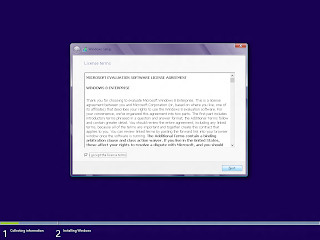
OS: Windows 8 RTM 90 day Evaluation 32bit PC: Acer Aspire One AOA 150 CPU: Atom N270 Graphics: Mobile Intel 945 Graphics Chipset with 256 MB memory HDD: 500gb 7200rpm SATA(custom) Screen Resolution: 1024x600 Installation: Installation was launched from within Windows 8 Release Preview. However, since upgrading from Windows 8 Release Preview to RTM is not supported, a clean installation was done Installing Windows 8 : License Agreement Select Upgrade vs Custom Install Select Partition Windows 8 Installation Windows 8 installation restarts the computer a couple of times. After installing devices, installation prompts you to select express settings vs custom settings. These settings include the new "Do Not Track" feature in Internet Explorer 10, which is enabled by default if you select Express Settings and is shown clearly. It also includes a "Share information with Apps including your name, picture and location" setting. This is to pe...